



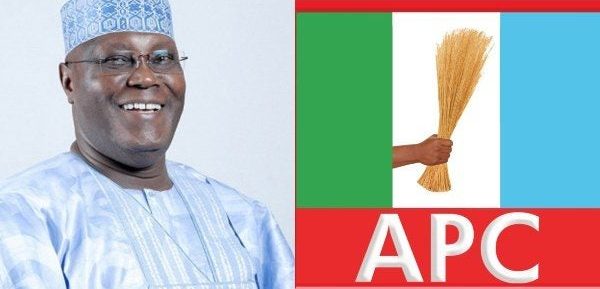
The All Progressives Congress Presidential Campaign Council (APC-PCC) has asked the presidential candidate of the African Democratic Party (ADC), Atiku Abubakar, to explain how his proposed subsidy for locally refined petrol would work under Nigeria’s existing petroleum laws and how the government would finance the scheme.
The council made the demand in a statement issued on Sunday by its spokesperson, Dele Alake, following Atiku’s proposal at a press conference in Abuja on Friday for a production subsidy aimed at lowering the cost of locally refined petrol.
The former vice-president had also called on President Bola Tinubu to reduce the prices of petrol and diesel.
Reacting to the proposal, the APC-PCC said it raised questions about the legal basis of government intervention in a downstream petroleum market that operates under deregulation.
📢 Stay Updated — Join Our WhatsApp Channel
💬 Be Part of Our WhatsApp Community
Join our WhatsApp Channel for curated updates, breaking stories, and exclusive insights from our newsroom.
📲 Join 👉 NRTC WhatsApp Channel
The council cited Section 205(1) of the Petroleum Industry Act (PIA) 2021, which provides for wholesale and retail petroleum prices to be determined by unrestricted market conditions. It also referred to recent comments by the Nigerian Midstream and Downstream Petroleum Regulatory Authority (NMDPRA) on the role of market forces in determining petrol prices.
The APC-PCC therefore asked Atiku to explain whether refineries that benefit from the proposed intervention would be required to sell petrol at government-prescribed prices.
According to the council, if the proposal involves price controls, Atiku should identify the legal provisions that would allow the government to impose such controls. If refiners would remain free to determine their prices, it said he should explain how subsidising production would guarantee lower prices for consumers rather than simply increase the refiners’ margins.
The council also questioned the potential financial burden of the proposal.
It estimated that supplying crude to local refineries at preferential prices could cost the Federation between ₦17 trillion and ₦21 trillion annually, depending on the level of the discount, the quantity covered and the petroleum products included in the scheme. The council said such a reduction in government revenue could put additional pressure on public finances.
The APC-PCC said Atiku should provide details of the proposed subsidy rate, the annual expenditure limit, the volume of crude or petrol that would qualify and the source of funding.
It also demanded an explanation of how the government would ensure that consumers actually benefited from the intervention and what measures would prevent diversion, smuggling and fraudulent claims.
ALSO READ
- APC campaign council challenges Atiku over petrol subsidy plan
- Shettima arrives in New York to lead Nigeria’s delegation at 81st UNGA
- Lagos, California sign sister-state agreement in Sacramento
The council further asked whether implementing the proposal would require amendments to the PIA.
Atiku’s position on subsidy
The APC-PCC also questioned what it described as a change in Atiku’s position on fuel subsidies.
The council referred to a speech Atiku delivered at the Lagos Business School in November 2022, during which he reportedly supported the removal of fuel subsidies. The council also cited a social media post by the former vice president in August 2026 in which he indicated support for restoring the policy.
The campaign council asked Atiku to explain how his proposed model would avoid the problems associated with previous subsidy arrangements, including alleged smuggling, scarcity and revenue losses.
It also questioned how the proposal would fit into the petroleum-sector reforms introduced under the PIA.
The APC-PCC contrasted Atiku’s proposal with the Tinubu administration’s promotion of alternative energy sources for transportation.
The council said more than 120,000 vehicles had been converted to compressed natural gas (CNG) and that the federal government was working with state governments to expand CNG and electric mass transit schemes.
It also claimed that commuters in several states and the Federal Capital Territory had recorded reductions in transport fares on routes served by CNG and electric buses.
The council said the government’s approach was aimed at reducing transportation costs without returning to the former petrol subsidy system.
🔍 Explore More
- NRTC English Knowledge Base – Learn, improve, and sharpen your English skills.
- Top Stories From Around the World – Stay informed with the latest global news and insights.
- Specially Curated Listicles – Discover interesting lists, guides, and deep dives selected for our readers.
- Stay Updated: Join our mailing list and never miss the latest articles and updates from NRTC.
Dangote refinery
The APC-PCC also pointed to increased domestic refining capacity as evidence of what it described as the benefits of the deregulated downstream petroleum market.
It cited the Dangote Petroleum Refinery, which has a stated capacity of 650,000 barrels per day, and said the facility had reached its nameplate capacity and recorded higher output during performance tests.
The council maintained that the government should continue to support domestic refining and market-based reforms while addressing the pressure that high energy costs have placed on households and businesses.
It urged Atiku to publish a detailed policy document setting out the legal, financial and operational details of his proposed subsidy.
The APC-PCC maintained that Nigerians needed to know how much the proposed intervention would cost, how it would be funded and what mechanism would ensure that the benefit reached consumers.